
The following is Part 1 of a 2 part series on development. Part 1 focuses on physical and cognitive development in humans; we will begin by exploring three basic issues. Firstly, we will discover the extent that the development process is the product of either nature or nature. Secondly we will discuss evidence for critical periods in psychological development. And finally, we will consider whether development occurs in stages or in a continuous, gradual change. After all of this, I will outline the most important psychological model of development that we have in cognitive psychology – Piaget’s theory of cognitive development.
Table of Contents
- Three Basic Issues of Development
- Studying Development
- Physical Development and its Psychological Consequences
- Piaget’s Theory of Cognitive Development
Three Basic Issues of Development
Nature or Nurture?

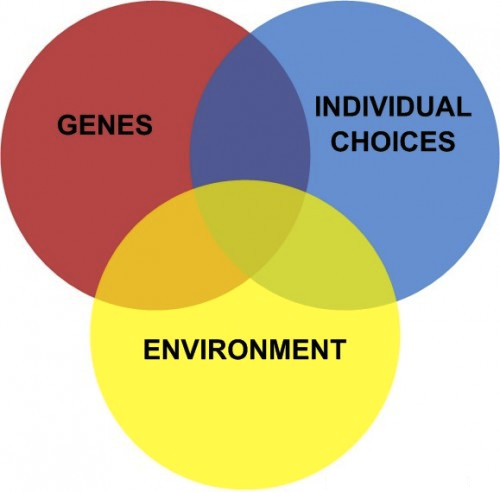
For almost as long as psychologists have been interested in development, they have wrestled with the extent to which changes in individuals over time reflect the influence of genetically programmed maturation (nature) or of learning and experience (nurture). Maturation refers to biologically based changes that follow an orderly sequence, each step setting the stage for the next step according to an age related calendar. Infants crawl before they walk and they utter single syllables before they can talk in complete sentences. Unless reared in a very deprived environment,, or physically impaired, virtually all human infants follow these same developmental patterns in the same sequence and at roughly the same age, give or take some months. Most psychologists believe that development, like personality or intelligence, reflects the action and mutual influence of genes and the environment. In other words, nature provides a fertile field for development, but this field requires cultivation.
Critical Periods in Development


Critical periods in human development are periods of sensitivity to specific types of learning and sensory stimulation which shape the capacity for future development. Critical periods in psychological development have been demonstrated in many animal species. The first few hours after hatching are a critical period for goslings (baby geese). They are biologically wired to follow whatever moving object they see, usually their mother. The concept of critical periods in humans is more controversial. Can a child who does not experience nurturant care taking in the first five years of life ever develop the capacity to love? What about a child who was raised by wolves?
Human development is more flexible than in other animals, but the brain is still particularly sensitive to certain kinds of environmental feedback at certain times. During some periods, the nervous system is most sensitive to forming new synapses between neurons, given the right environmental stimulus. Equally important is the pruning of neurons: infants are born with an abundance of neural connections, and those that are not used or activated by the environment are gradually lost. Children also have sensitive periods, which are times that are more important to subsequent development than others. In some domains, such as language, these sensitive periods may actually be critical; appropriate environmental input at certain points may be required or further development is permanently impaired. In most domains, however, sensitive periods are simply sensitive – particularly important but not decisive.

Stages or Continuous Change?

The third basic issue in development concerns the nature of developmental change. According to one view, development occurs in stages, relatively discrete steps through which everyone progresses in the same sequence. Behaviour in one stage is not just quantitatively different from the next, involving a little less or more of something, but qualitatively different; a stage theorist would suggest, for example, that the ability to engage in abstract thinking is a novel development in adolescence, not just a gradual refinement of the way younger children think. An alternative perspective sees development as a continuous process, characterised less by major transformations than by steady and gradual change. From this point of view, what may look like a massive change, such as becoming literate between the ages of five and eight, may actually reflect a slow and steady process of learning or increased reinforcement for independent behaviour. So basically, this view suggests that behaviour might appear to appear in a new stage, it has been practiced leading up to that point. Most psychologists now believe that development involves both stages and continuous processes, this is because psychologists don’t like to fight.
Studying Development
Psychologists primarily use three types of research designs to study development, they are: cross-sectional, longitudinal and sequential.
Cross-Sectional Studies
Cross-sectional studies compare groups of participants of different ages at a single time to see whether differences exist among them. For example, a research group studied people who had reached 100 years of age and compared trhem on a number of dimensions with people in their 60s and 80s (Poon et al., 1992). Cross-sectional studies are useful for providing a snap shot of age differences, or variations among people of different ages. The major limitation of cross-sectional studies is that they do not directly assess age changes; that is, changes within the same individuals that occur with age. As a result, they are vulnerable to confounding variables. Cross-sectional studies are therefore most useful when cohort effects – differences among age groups associated with differences in cilture – are minimal.
Longitudinal Studies
Longitudinal studies assess the same individuals over time, providing the opportunity to assess age changes rather than age differences. The advantage of longitudinal studies is their ability to reveal differences among individuals as well as changes within individuals over time. Like cross-sectional designs, longitudinal designs are vulnerable to cohort effects. Because they investigate only one cohort, they cannot rule out the possibility that people born at a different time might show different development paths.
Sequential Studies
Sequential studies minimise cohort effects by studying cohorts longitudinally. In an ideal sequential design, researchers study a group of people at one age and follow them up over time. As the study progresses, a new and younger cohort is added to the study, beginning at the same age at which the first cohort began. Essentially, a sequential design combines cross-sectional and longitudinal comparisons, allowing researchers to distinguish between age effects and cohort effects. The only catch is that sequential designs take years or even decades to complete.
Physical Development and its Psychological Consequences
Having examined some of the basic issues and methods of developmental psychology, we now turn our attention towards physical development and its impact on psychological functioning. Some of the most dramatic aspects of physical development take place before we are even born. Let’s have a look shall we?
Prenatal Development

One of the most remarkable aspects of human development is that a single cell, forged by the union of a sperm and an egg, contains the blueprint for an organism that will emerge – complete with billions of specialised cells – nine months later. The prenatal period is divided into three stages.
- During the germinal period – roughly 2 weeks post conception – the fertilised egg becomes implanted in the uterus.
- The embryonic period – 3rd – 8th week of gestation – is the most important period in the development of the central nervous system and of the organs. By the end of this stage, the features of the embryo become recognisably human, the rudiments of most organs have formed and the heart starts to beat it’s life long rhythm.
- During the foetal period – 9 weeks to birth – muscular development is rapid. By about 28 weeks, the foetus is capable of sustaining life on its own.
Infancy

At birth, an infant possesses many adaptive reflexes. For example, the rooting reflex helps ensure that the infant will get nourishment: when touched on the cheek, an infant will turn her head and open her mouth, ready to collect milk. The sucking reflex is similarly adaptive: infants suck rhythmically in response to stimulation 3 or 4 centimetres inside their mouths . Many early reflexes disappear within the first six or seven months, as infants gain more control over their movements. In general, motor skills progress from head to toe: infants first master movements of the head, then the trunk and arms and finally the legs. Motor development in infancy follows a universal sequence, from smiling, turning the head and rolling over, to crawling, walking with support and finally standing alone and walking without help from any one.
Childhood and Adolescence

Some of the most important maturational changes that influence psychological development involves changes in the size and shape of the body. A remarkable aspect of human development is the extent to which children can maintain the sense that they are the same person over time despite massive changes in the way they look. Growth rates for girls and boys are roughly equal until around age 10. At that point, girls begin a growth spurt that usually peaks at age 12, and boys typically follow two or three years later. Individuals of both sexes vary, however, in the age at which they enter puberty, the time at which they become capable of reproduction. Girls usually experience the onset of menstruation at about age 11 to 13, while for boys, mature sperm production is somewhat later, about 14 to 15 years.
Adulthood and Ageing

By the end of adolescence, physical growth is virtually complete, and the changes that occur thereafter tend to be gradual and less dramatic. People often gain a few centimetres in height and several more centimetres in fat between ages 18 and 28. By their 30s, people are already deteriorating physically, with muscular strength and sensory abilities showing subtle but clear signs of decline. Individuals also differ tremendously, however, in the extent and pace of these changes, as some 80 year olds run marathons in their free time.
Old Age
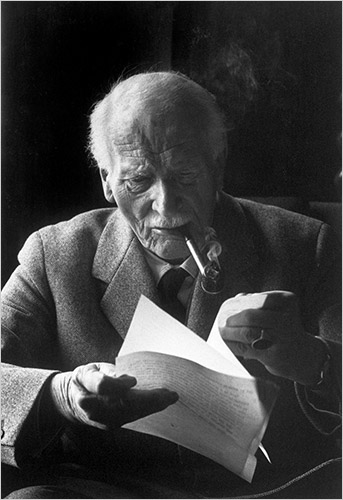
As in childhood, some of the most apparent signs of ageing are in physical appearance, such as wrinkled skin and grey hair. Sensory changes are also substantial, older adults have reduced sensitivity to visual contrasts – for example, climbing stairs can be difficult because they have trouble seeing where one step ends and another begins (Fozard, 1990). Older adults also take a longer time adapting to the dark, which can cause problems driving at night, as oncoming headlights may create temporary flashes of brightness. Hearing loss is also common. Many older people experience presbycusis, the inability to hear high frequency sounds, which can make hearing the phone ringing quite difficult. The inability to understand what others are saying can have disturbing psychological consequences. We often lose patience with old people who constantly ask us to repeat what we have said to them. Younger people may also inadvertently treat older people with hearing loss condescendingly, speaking slowly or more loudly. Deterioration in certain areas of functioning is an inevitable part of ageing, but development throughout the life span is characterised by gains as well as losses. Many Western images of the elderly stem from negative cultural myths and stereotypes, such as the idea that sexuality ends in the 40s or 50s and that old people are destined to become senile. These stereotypes are examples of ageism, or prejudices against old people. We all have to become old sooner or later, however, people generally don’t want to accept this ugly truth and so we instead outcast old people and treat them as though they are different from us.
Piaget’s Theory of Cognitive Development
The first psychologist to trace cognitive development systematically was Jean Piaget (1896-1980). Piaget had a keen interest in epistemology, the branch of philosophy concerned with the nature of knowledge. The British empiricist philosophers, such as John Locke, argued that all knowledge comes from experience. To know what a dog is like, a person has to examine a number of dogs, experience them with the senses and come to some conclusions about their common properties. In contrast, German philosopher Immanuel Kant argued that some forms of knowledge do not come from observation, but are innate. Kant’s ideas were the starting point for Piaget’s life work. He believed that Kant was both right and wrong with his theories. Kant was right, in the sense that people’s understanding of time, space and logic is not simply formulated from experience, but he was wrong, Piaget thought, in that people were born with this knowledge. Piaget (1970) proposed that children develop knowledge by inventing or constructing reality out of their own experience, mixing what they observe with their own ideas about how the world works.
Assimilation and Accommodation
Piaget viewed intelligence as the individual’s way of adapting to new information about the world. He asserted that children cognitively adapt to their environment through two interrelated processes, assimilation and accommodation. Assimilation involves interpreting actions or events in terms of one’s present schemas – that is, fitting reality into one’s existing ways of understanding. According to Piaget, a schema is an organised, repeatedly exercised pattern of thought or behaviour. If humans only assimilated information into existing schemas, no cognitive development would take place. The second process, called accommodation, is the modification of schemas to fit reality. For Piaget, the driving force behind cognitive development is equilibration – that is, balancing assimilation and accommodation to adapt to the world. When a child comes across something he does not understand, he finds himself in a state of cognitive disequilibrium that motivates him to make sense of what he has encountered. He may attempt to fit it into existing schemas (assimilation) or he may combine schemas or construct an entirely new schema to fit the new reality (accommodation). For example, an infant who is brought in front of a mirror by his father, will have trouble coming to terms with the fact that the baby in the mirror is actually him and that he doesn’t have two fathers – the one holding him and the one holding another baby in front of him. Eventually he constructs the understanding that a mirror is a special kind of surface that reflects images, and he will accommodate this into a new schema.
Stages of Cognitive Development
Sensorimotor
Ages 0-2
Thought and action are virtually identical, as the infant explores the world with its senses and behaviours; object permanence develops, the child is completely egocentric.
Preoperational
Ages 2-7
Symbolic thought develops; object permanence is firmly established; the child cannot coordinate different physical attributes of an object or different perspectives.
Concrete Operational
Ages 7-12
The child is able to perform reversible mental operations on representations of objects; understanding of conservation develops; the child can apply logic to concrete situations.
Formal Operational
Ages 12+
The adolescent or adult can apply logic more abstractly; hypothetical thinking develops.
Sensorimotor Stage (0-2)
The sensorimotor stage, in which infants think with their hands, mouths and senses, lasts from birth to about two years of age. Sensorimotor thought primarily takes the form of action, as infants learn about the world by mouthing, watching and manipulating objects. According to Piaget, the practical knowledge infants develop during this period forms the basis for their later ability to represent things mentally. The term sensorimoter emphasises that infants are bound by their sensations and actions and are capable of little explicit reasoning beyond what they are sensing and doing.
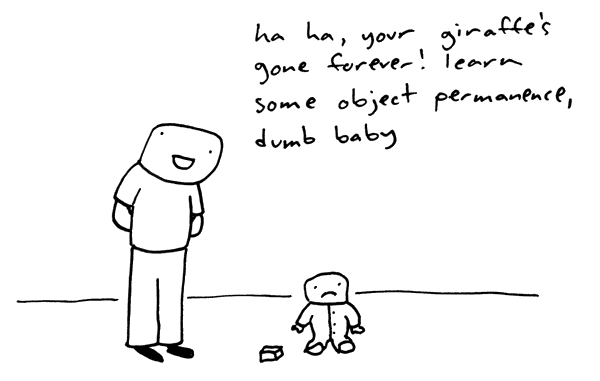
A major achievement of the sensorimotor stage is the development of object permanence, the recognition that objects exist in time and space independent of the child’s observations or actions towards the object. According to Piaget, before the age of about 12 months, an object such as a ball exists for an infant only when it is in sight; if it is hidden from view, it no longer exists! When a child acquires object permanence, he will look for the ball, even when it is hidden from view, and he will be delighted to find it. Piaget suggested that the attainment of object permanence lies behind infants’ endless fascination with games such as peek-a-boo, which confirm their new understanding. During the sensorimotor stage, children are extremely egocentric, they are thoroughly embedded in their own point of view. When an infant closes her eyes, the whole world becomes dark; when a ball is no longer in view, it ceases to exist. In a way they see themselves as little Gods. For Piaget, development entails gradual movement away from egocentrism towards a recognition of alternate points of view, particularly the points of view of others.
Preoperational Stage (2-7)
The preoperational stage begins roughly around age two and lasts until ages five to seven. It is characterised by the emergence of symbolic thought – the ability to use symbols to represent concepts. Once children learn to manipulate symbols and mental images, thought becomes detachable from action. To put it in another way, when children can play with the world in their minds, then no longer have to think exclusively with their hands and mouths. Symbolic thought allows preschool children to converse with other people and to imagine solutions to problems before actually doing anything physically. A limitation of preoperational thought is centration, the tendency to centre their focus on one perceptually striking feature of an object without considering other features that might be relevant. Children in this stage are still fairly ecocentric, but significantly less so than in the sensorimotor stage; they no longer think the world revolves around them, but are still unable to view things from another person’s perspective.
Concrete Operational Stage (7-12)
The third stage of cognitive development, called the concrete operational stage, occurs roughly between the ages of 7 to 12. At this point, children are capable of mentally manipulating internal representations of concrete objects in ways that are reversible. In other words, children can imagine altering a set of objects, and can then mentally put them back to the way they found them. For example, school age children are able to imagine different ways of explaining why they haven’t done their homework, picture the likely consequence of each excuse, and pick the one with the highest perceived chance of acceptance. In contrast, younger children will either blurt out a ridiculous lie or tell the truth, much to the amusement of cognitively superior adults.
The major achievement of the concrete operational stage is the child’s ability to understand the concept of conservation, that basic properties of an object or situation remain stable even though superficial properties may change. For example, a child in this stage knows that liquid being poured from a small but thick glass into a tall and thin glass of the same volume, is the same liquid with the same volume, even though the glasses appear to be of different sized. Similarly, a child can squash a ball of clay or play dough, and understand that the clay is still the same clay, it is just a different shape after being squashed.
Formal Operational Stage (12+)
Piaget’s fourth and final stage begins roughly around ages 12-15. The formal operational stage is characterised by the ability to manipulate abstract as well as concrete objects, events and ideas mentally. Another hallmark of the formal operational stage is the new ability to be able to think about and manipulate hypothetical scenarios, ‘what if’ situations that elaborate on made up situations and their consequences. It is during this stage that children become fascinated by questions such as, ‘would you rather be eaten quickly – by a lion, or very slowly – by ants?’ Or maybe that was just me…
And that about covers this part on human development.
Check Out Part 7 of Psychology 101: Development II – Social Development!
Other guides in the Psychology 101 series: